![反応制御学研究室[大野研究室 / Ohno LAB.]](https://www.ironmaking.kyushu-u.ac.jp/wp/wp-content/uploads/2025/04/スクリーンショット-2025-04-07-16.54.15.png)
九州大学の QFC-SP(Future Scientist Program) に参加した
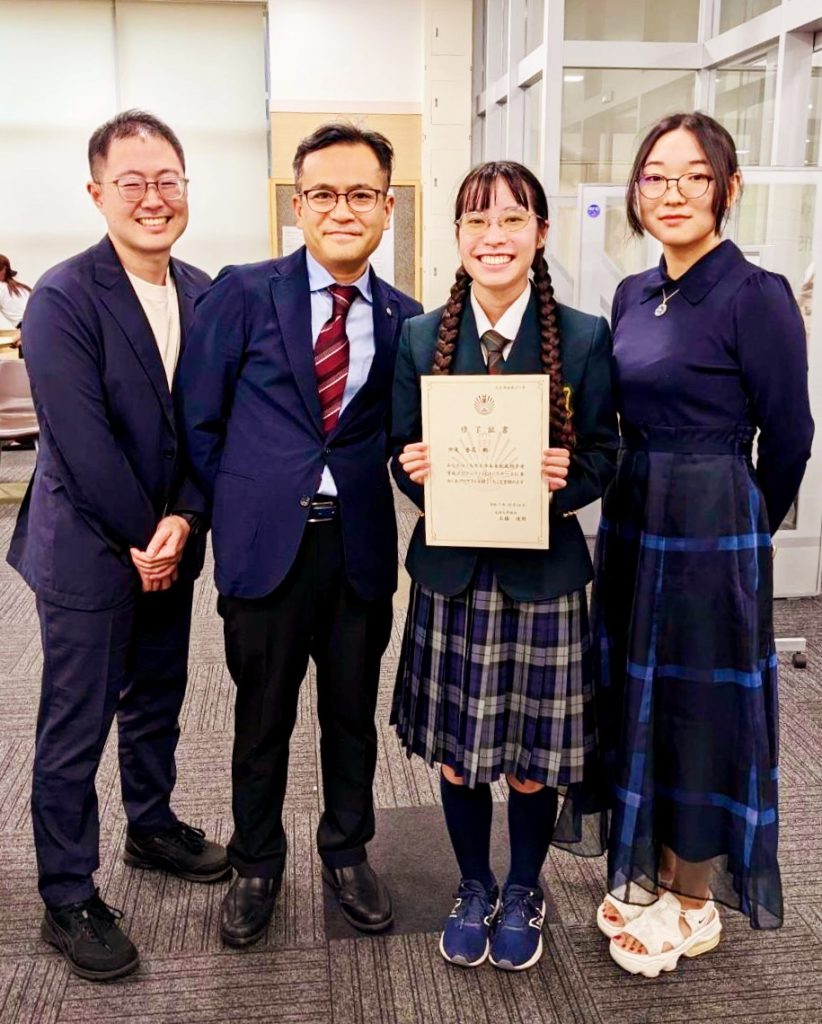
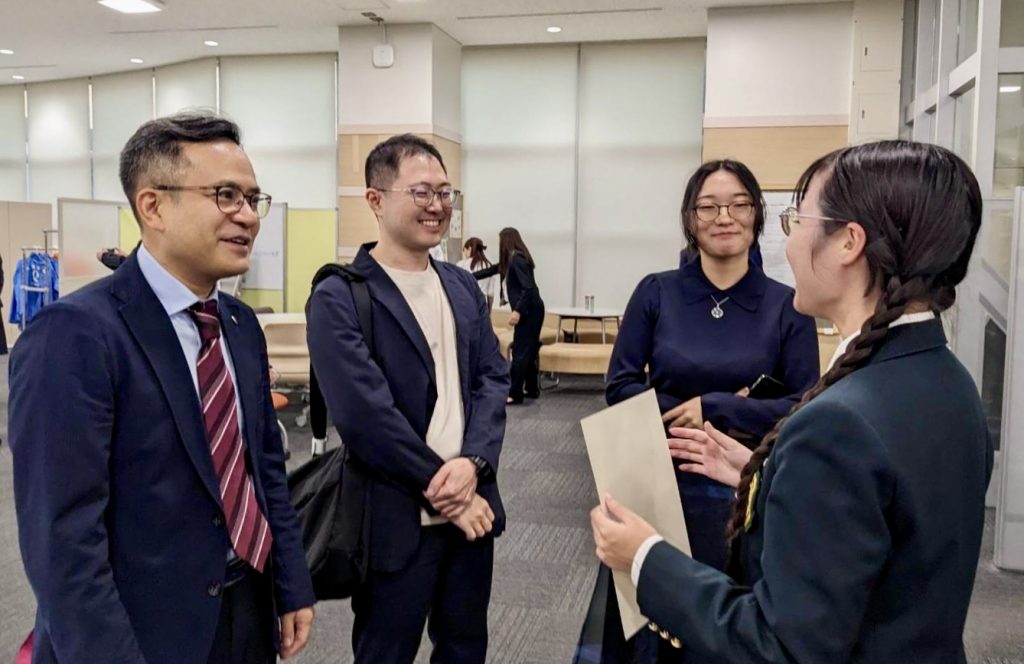
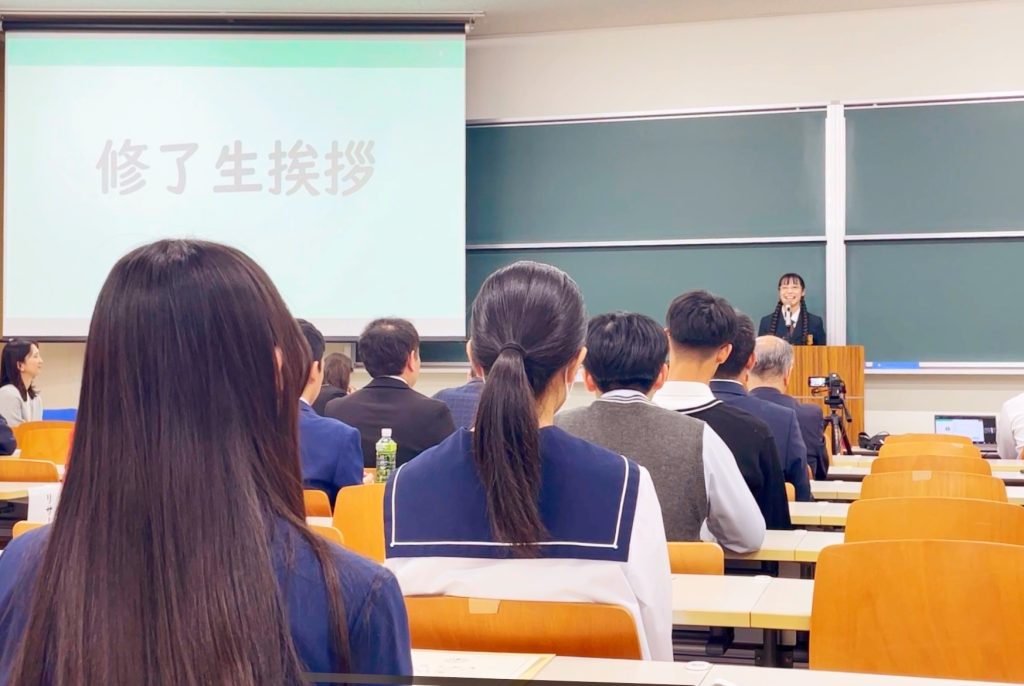
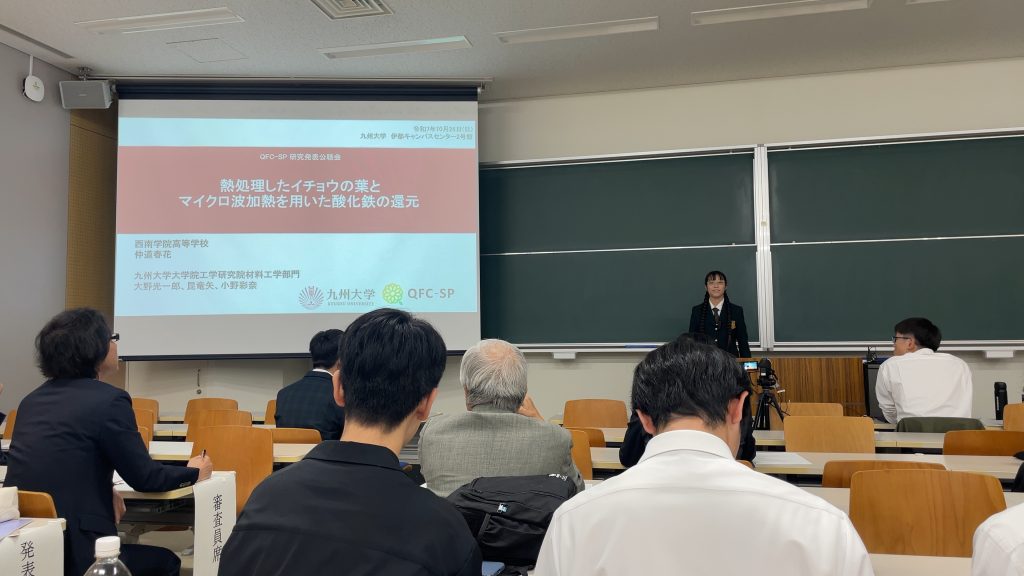
高校生の 仲道春花さん が、約11か月間にわたる研究プロジェクトを無事に修了しました。
QFC-SP は、意欲ある高校生が大学の研究室に所属し、本格的な研究活動を体験する選抜制プログラムです。
仲道さんは 大野研究室にて、全 15回の研究活動に主体的に取り組みました。
研究テーマ
「イチョウ落葉を炭素源としたマイクロ波加熱による酸化鉄の炭素熱還元」
福岡市で焼却処分されることの多いイチョウ落葉を、
持続可能な製鉄プロセスに利用できる炭素源として再活用できないかという問いから研究を開始。
落葉の**熱処理温度(120 / 300 / 900℃)**の違いが、
マイクロ波加熱下での酸化鉄還元挙動に与える影響を系統的に調べ、
XRD や SEM/EDS を用いた相・組織解析まで自ら実施しました。
成果
本研究は、
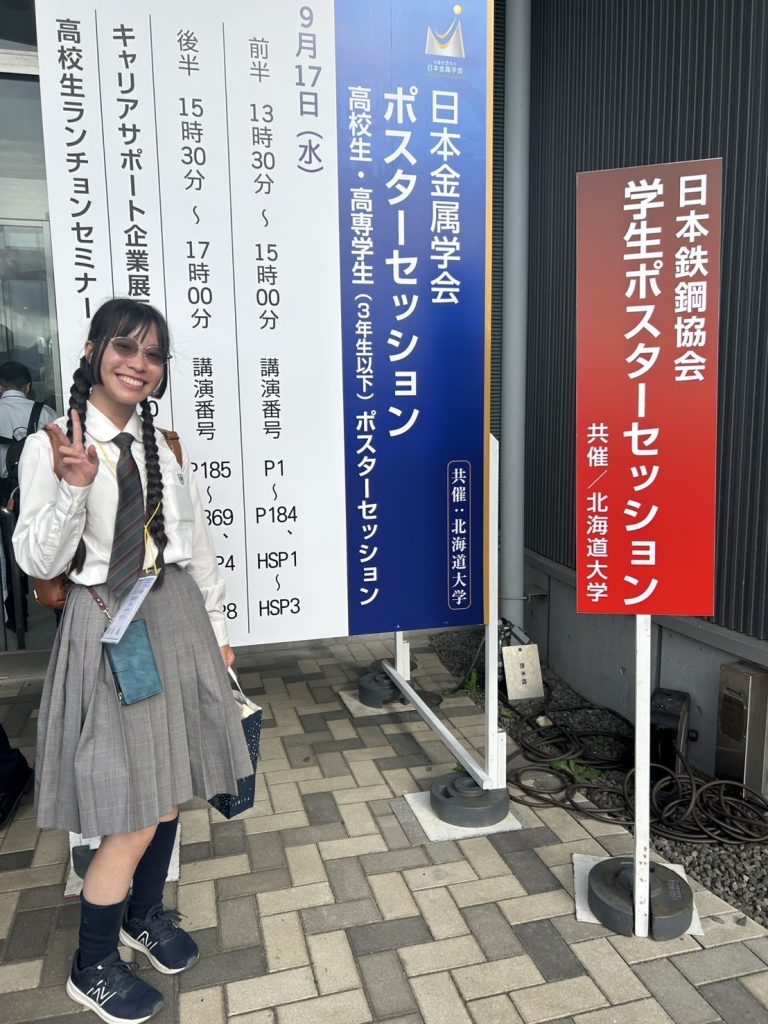
日本金属学会 高校生ポスターセッション
(2025年9月・北海道大学)にて発表され、
**最優秀賞に相当する「日本金属学会会長賞」**を受賞しました。
高校生の段階で、
**「環境問題 × 材料工学 × 実験研究」**に正面から取り組んだ、非常に意義深い挑戦でした。
次世代の冶金・材料研究者を育てることは、グリーンスチール実現への重要な一歩でもあります。
Screenshot
An 11-Month Research Journey by a High-School Student — Completion of the QFC-SP Future Scientist Program
Ms. Haruka Nakamichi, a high-school student participating in Kyushu University’s QFC-SP (Future Scientist Program), has successfully completed an 11-month research project.
QFC-SP is a selective program that allows highly motivated high-school students to join university laboratories and experience authentic scientific research.
Ms. Nakamichi conducted her research in the Ohno Laboratory at Kyushu University, completing 15 hands-on research sessions.
Research Topic
“Microwave-Assisted Carbothermic Reduction of Iron Oxide Using Ginkgo Leaves as a Carbon Source”
The project began with a simple yet important question:
Can fallen ginkgo leaves, which are often incinerated in Fukuoka City, be reused as a sustainable carbon source for ironmaking?
She systematically investigated how the heat-treatment temperature of ginkgo leaves (120 / 300 / 900 °C) affects the reduction behavior of iron oxide under microwave heating, and independently carried out XRD and SEM/EDS analyses.
Achievement
The results were presented at the High-School Poster Session of the Japan Institute of Metals and Materials
(Hokkaido University, September 2025), where she received the JIM President’s Award, the highest honor of the session.
Taking on a research challenge that directly connects environmental issues, materials engineering, and experimental science at the high-school level is truly remarkable.
Nurturing the next generation of metallurgists and materials scientists is itself a vital step toward a sustainable, green steel future.
