![反応制御学研究室[大野研究室 / Ohno LAB.]](https://www.ironmaking.kyushu-u.ac.jp/wp/wp-content/uploads/2025/04/スクリーンショット-2025-04-07-16.54.15.png)
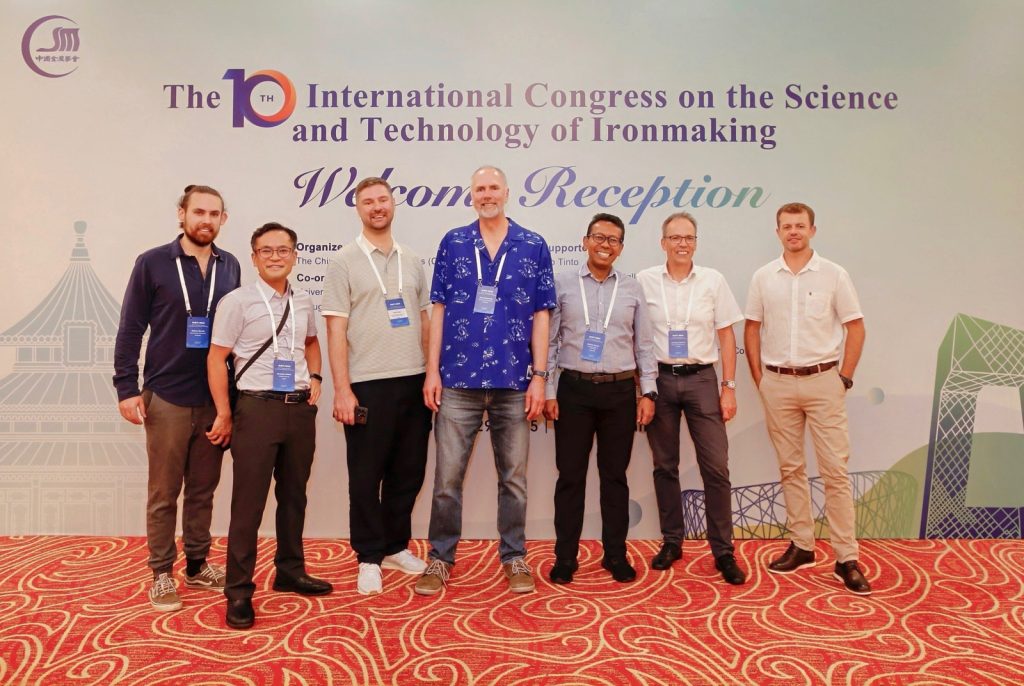
2025年8月25日〜29日、中国・北京で開催された
世界製銑科学技術会議(ICSTI2025) に参加しました。
私にとっては初めての北京訪問でしたが、次世代製鉄技術を巡る密度の高い議論のおかげで、非常に刺激的で実りある経験となりました。
本会議では、国際科学委員会(International Scientific Committee)の一員として、以下の 3つの役割を担いました。
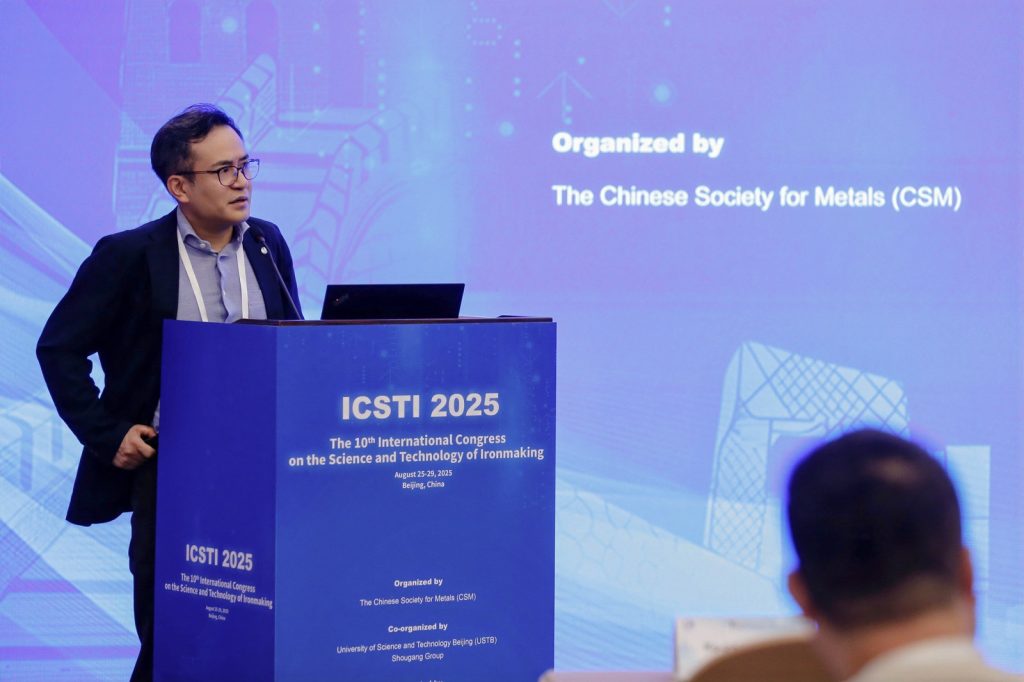
① 基調講演
「H₂混合ガスが鉄鉱石ペレットの膨潤挙動に及ぼす影響」
日本の国家プロジェクト GREINS における
H-DRIプロセスの基礎研究を紹介しました。
水素製鉄における反応挙動の理解は、将来のプロセス設計に直結する重要なテーマです。
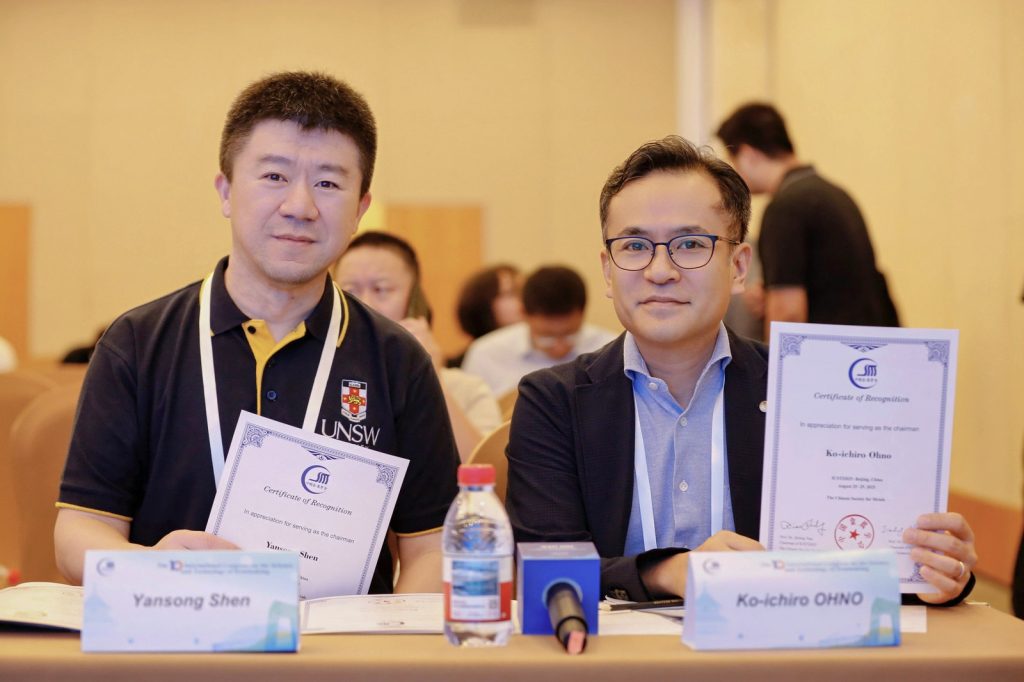
② セッション座長
「水素製鉄」を主要テーマとするパラレルセッションにおいて、
**沈岩松 先生(Prof. Yansong Shen)**と共に座長を務めました。
世界各国の研究成果が集まり、水素利用の方向性について活発な議論が行われました。
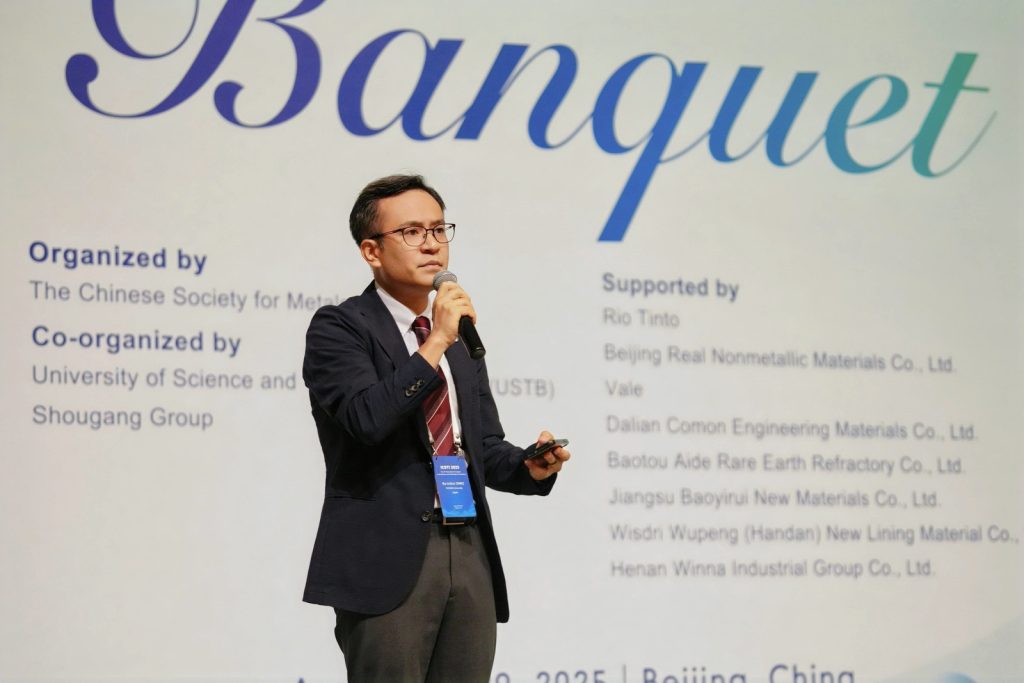
③ 次回開催地の公式発表
バンケットという公式の場で、
次回 ICSTI が日本🇯🇵で開催されることを発表するという大役を任されました。
次回は ICSTI2027(2027年6月14日〜18日、札幌) です。
会議を通じて、脱炭素製鉄に取り組む世界中の研究者と再会し、
新たなネットワークも生まれ、国際チームとして確実に前進していることを実感しました。
このような貴重な機会を企画いただいた
中国金属学会、
中国科技大学(USTB)、
首鋼集団 に心より感謝申し上げます。
また、張建良 先生(Chairman)、
李克江 先生(Deputy Secretary General)に深く御礼申し上げます。
材料工学・冶金工学に興味のある学生の皆さんへ。
こうした国際会議は、「研究成果を発信する場」であると同時に、
世界とつながり、次の研究を生み出す出発点でもあります。
ぜひ、将来この舞台に立つことを目標に、一歩ずつ研究を積み重ねてほしいと思います。
Experiencing the Global Frontline of Next-Generation Ironmaking
— Reflections from ICSTI2025 in Beijing
From August 25 to 29, 2025, I participated in the International Conference on Science and Technology of Ironmaking (ICSTI2025) held in Beijing, China.
This was my first visit to Beijing, and thanks to the intense and forward-looking discussions on next-generation ironmaking technologies, it became an exceptionally stimulating experience.
As a member of the International Scientific Committee, I contributed in three main ways:
First, I delivered a keynote lecture titled
“Effect of H₂-Containing Gas on the Swelling Behavior of Iron Ore Pellets,”
introducing fundamental studies on the H-DRI process conducted under Japan’s national GREINS initiative.
Second, I served as a session chair for one of the major parallel themes, hydrogen-based ironmaking, together with Yansong Shen.
Third, during the official conference banquet, I had the honor of announcing that the next ICSTI will be held in Japan,
with ICSTI2027 scheduled for June 14–18, 2027, in Sapporo.
Throughout the conference, I was able to reconnect with colleagues working on decarbonized ironmaking around the world and establish new collaborations.
It strongly reaffirmed that the global ironmaking community is moving forward as a unified team toward carbon neutrality.
I would like to express my sincere gratitude to the Chinese Society for Metals,
University of Science and Technology Beijing,
and Shougang Group for organizing this outstanding event,
as well as to Jianliang Zhang (Chairman) and
Kejiang Li (Deputy Secretary General) for their generous support.
For students interested in materials science and metallurgy, international conferences like ICSTI are not distant events—they are future stages where your research can directly shape global technological transitions.
