![反応制御学研究室[大野研究室 / Ohno LAB.]](https://www.ironmaking.kyushu-u.ac.jp/wp/wp-content/uploads/2025/04/スクリーンショット-2025-04-07-16.54.15.png)
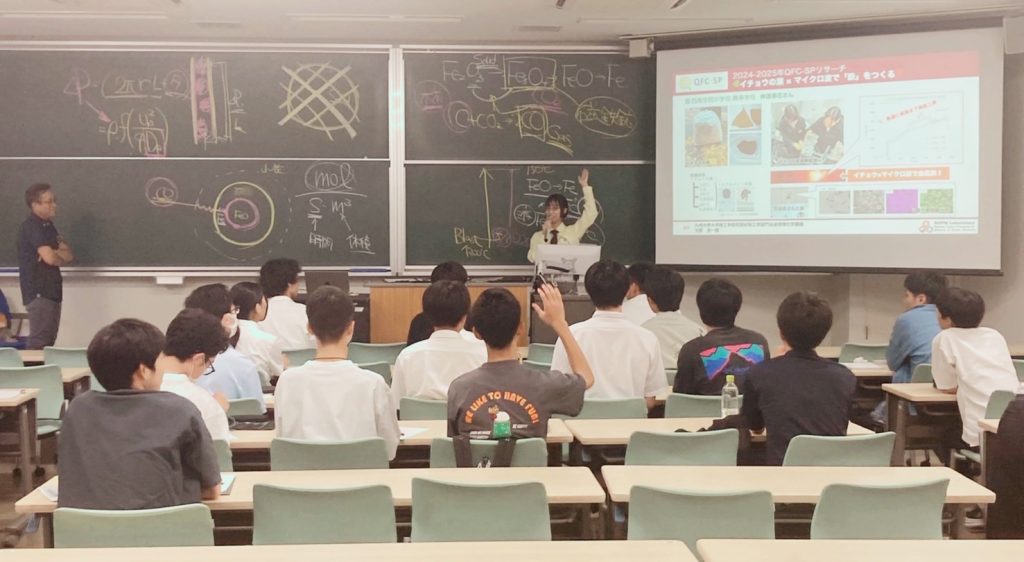
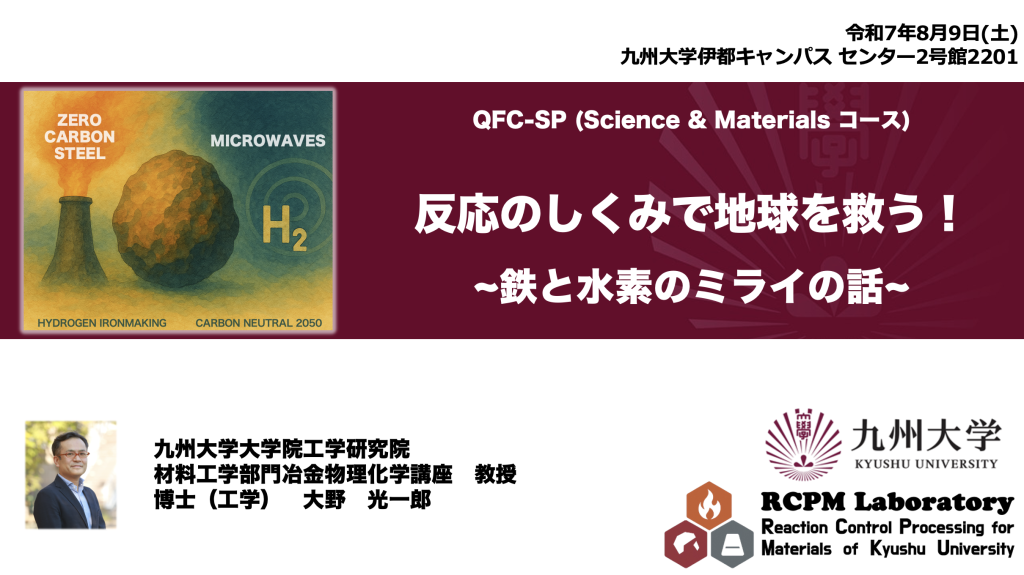
8月9日、九州大学 QFC-SP 未来の科学者育成プログラム(4日間・全12講義)の最終セッションを担当しました。
最終回にもかかわらず、高校生たちの眼差しは鋭く、次々に本質を突く質問が飛び交い、次世代の研究者の芽を強く感じる時間となりました。
講義で扱ったテーマ
この講義では、「身近な疑問」から「最先端の冶金研究」へと話を展開しました。
-
九州大学における材料工学と脱炭素関連プロジェクト
-
地球温暖化と製鉄産業 ― なぜ変革が必要なのか
-
高炉の基礎:なぜ微粉鉱石は焼結する必要があるのか
-
タピオカミルクティーの比喩:充填層中のガス流れと圧力損失
-
水素還元製鉄とマイクロ波加熱:高速・選択的加熱による持続可能な冶金
-
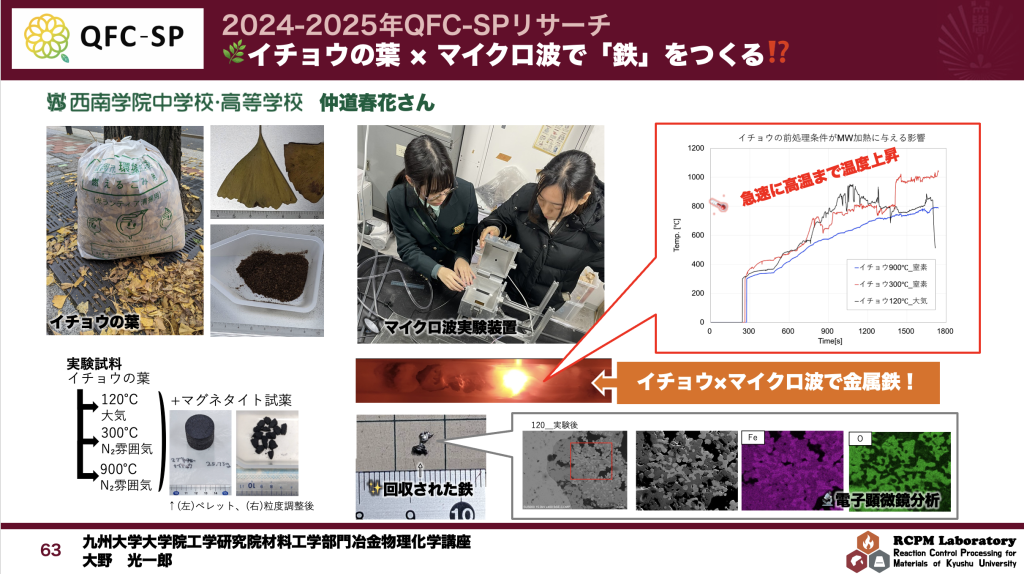
QFC-SP研究テーマ:イチョウの葉を還元材として用いたマイクロ波還元
高校生からの鋭い質問
-
マイクロ波シールドと放射線シールドの違い・関係は?
-
鉱石が溶融しても、高炉内でガス流れが維持されるのはなぜ?
-
未反応核が存在するかどうかは、どのように判断するのか?
印象的な瞬間
現在大野研究室で研究に取り組んでいる高校生研究者 中道はるかさんは、
9月の日本金属学会・高校生ポスターセッションにて
「イチョウ葉を用いた酸化鉄のマイクロ波還元」を発表予定です。
彼女から同世代へのメッセージはとても印象的でした。
「先生の研究分野と少しでも重なる興味があれば、
思い切ってリサーチコースに挑戦してみて!」
こうした場面に立ち会うたびに実感します。
好奇心の小さな火花が、研究者としてのキャリアを切り拓く炎になるのだと。
材料工学・冶金工学に少しでも興味を持った皆さん、
次はぜひ、大学の研究室というフィールドで一歩踏み出してみてください。
From Blast Furnaces to Ginkgo Leaves
— A Lecture Nurturing the Next Generation of Scientists
On August 9, I delivered the final lecture of the QFC-SP Future Scientist Program at Kyushu University, a four-day outreach program consisting of twelve lectures.
Despite being the last session, the high school students remained highly engaged, asking sharp and fundamental questions that clearly reflected the mindset of future researchers.
Topics Covered
Starting from everyday curiosity, the lecture connected basic principles to advanced metallurgical research:
-
Materials engineering and decarbonization projects at Kyushu University
-
Climate change and the steel industry — why transformation is essential
-
Fundamentals of the blast furnace and the role of sintering fine ores
-
Bubble tea as an analogy to understand gas flow in packed beds
-
Hydrogen-based ironmaking and microwave heating for rapid, selective processing
-
QFC-SP research themes, including microwave reduction of iron oxide using ginkgo leaves
Insightful Questions from Students
Questions ranged from microwave shielding and radiation physics to gas flow in molten zones and how to identify unreacted cores—demonstrating remarkable depth of thinking.
A Special Highlight
One high school researcher, Haruka Nakamichi, currently working in the Ohno Laboratory, will present her work on
“Microwave Reduction of Iron Oxide Using Ginkgo Leaves”
at the Japan Institute of Metals and Materials High School Poster Session this September.
Her message to fellow students was simple yet powerful:
“If you find even a small overlap with your interests, don’t hesitate to challenge yourself and try a research course.”
Moments like this remind us that curiosity is often the spark that ignites a lifelong research journey.
For students interested in materials science and metallurgy, the laboratory is where that journey truly begins.
